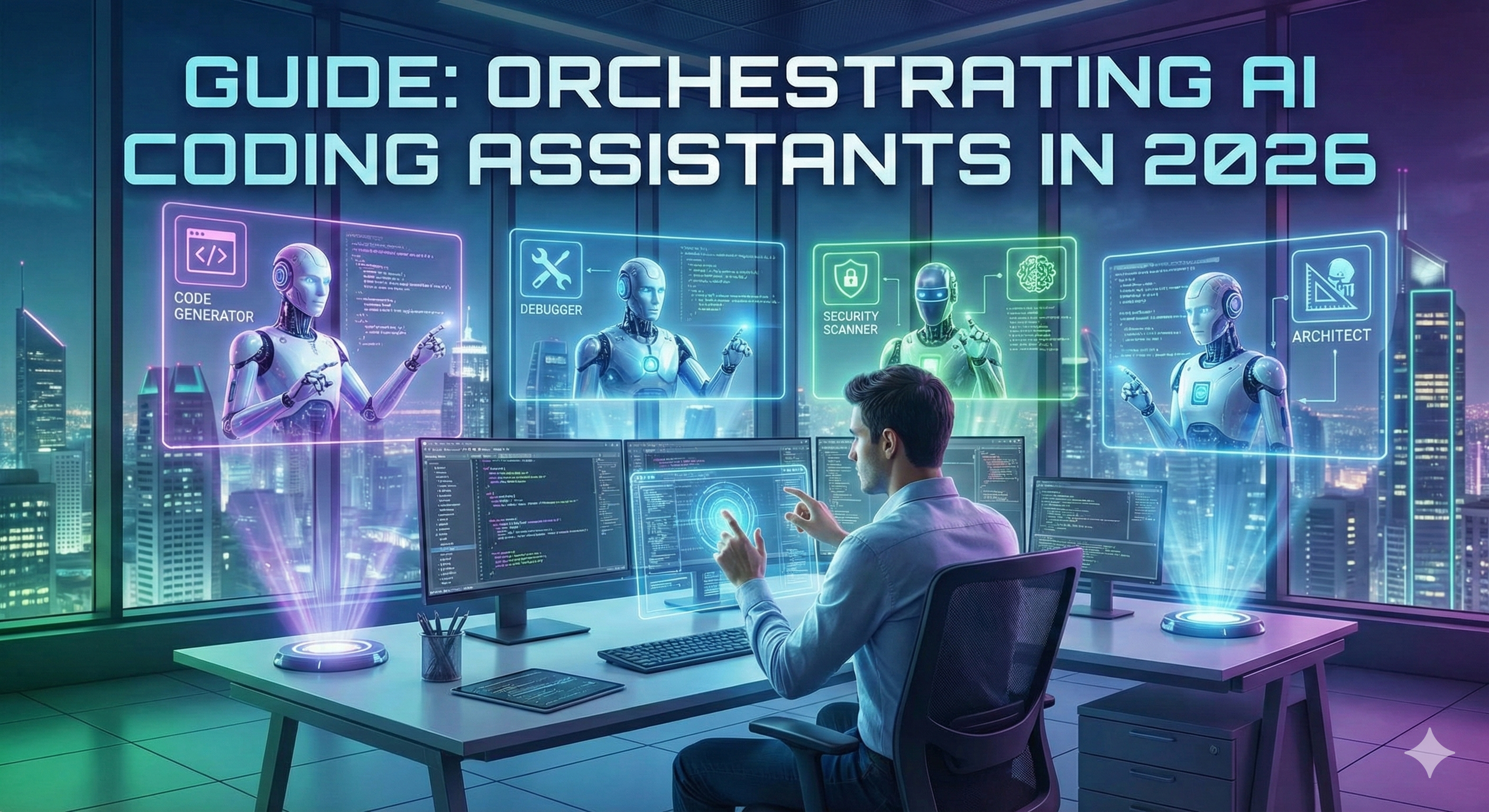
AI is the new baseline, orchestration is the edge
In 2026, AI coding assistants like OpenAI’s Codex and Anthropic’s Claude have become integral to a developer’s workflow. These tools can generate significant portions of code automatically—at Anthropic, roughly 90% of the code for their Claude Code base is now written by the AI itself. But using large language models for programming is not a push-button magic solution. Seasoned engineers have learned that harnessing AI effectively takes skill and structure: great results require clear direction, rich context, and human oversight. The “perfect” development setup in 2026 isn’t about letting an AI run wild; it’s about orchestrating these tools intelligently.
Start with a clear plan
Don’t dive straight into coding with a vague prompt. The first step toward getting what you want from an AI coder is planning. Define the problem and sketch out a solution strategy together with the assistant before writing any actual code. Many experienced devs now begin by brainstorming a detailed specification with the AI, refining requirements and edge cases through a back-and-forth dialogue. The outcome is a comprehensive spec.md capturing requirements, architecture decisions, data models, and even a testing strategy—a shared blueprint that both you and the AI can reference. Once you have a solid spec, use the AI to outline an implementation plan. Ask a reasoning-oriented model to break the project into logical tasks or milestones, then refine it until it’s clear and complete. This upfront investment pays off enormously. With a clear spec and step-by-step plan in hand, when you finally unleash the code generation, both you and the AI are on the same page about what you’re building and why. This prevents wasted cycles and misdirection.
Work iteratively in small steps
Another best practice is to break the work into small, iterative chunks. Rather than asking the AI to generate a huge swath of an application in one go, give it focused tasks one at a time. After planning, you might say: “Let’s implement Step 1,” then work with the AI on that function or module, test it, and only then proceed to Step 2. Large, monolithic prompts tend to confuse even powerful models—they may produce a jumbled output or inconsistent design. The fix is simple: iterate. By handling one feature or bug at a time, you carry forward the context of what’s been built and can quickly course-correct if needed. LLMs excel at quick, contained tasks, so feed them manageable chunks and integrate each piece incrementally.
Externalize context, constraints, and intent
To get consistent results, don’t keep critical context only in your head—externalize it for the AI. Language models are only as good as the information you provide. Before a coding session, give the AI the relevant background, constraints, and examples it needs: the snippet it must modify, coding standards, architectural constraints, and known pitfalls to avoid. Modern tools can auto-include some context, but it’s often worth going further—doing a manual “brain dump” of goals, invariants, and examples of correct solutions. If you’re using a niche library or a brand-new API, paste in the relevant docs. All of this upfront context dramatically improves output quality, because the model isn’t guessing—it has the facts and constraints in front of it.
AGENTS.md: persistent project memory
An AGENTS.md file serves as a persistent memory or rulebook for your AI coding agent. It encodes project-specific guidance that persists across sessions: coding style rules, architectural patterns, performance constraints, and pitfalls the AI has learned from past mistakes. A well-structured AGENTS.md keeps multiple AI tools on the same page. If you’re using Claude alongside Codex, both can reference the same AGENTS.md so they share the same ground truths and conventions. By centralizing this knowledge, you reduce uncertainty for the model and improve consistency across runs.
SKILLS.md: on-demand expertise modules
Complementary to AGENTS.md is the idea of Skills defined in SKILL.md files. Skills are modular, discoverable packages of specialized knowledge and workflows. Instead of cramming instructions into one giant prompt, an agent loads only the skill it needs at the moment it needs it. This progressive disclosure keeps context lean and reduces token waste. It also makes behavior more consistent: a skill can define a step-by-step process for a task, yielding predictable outputs every time. Because skills are an open standard, they’re portable across models and vendors.
Orchestrate, don’t just pick tools
Success with AI coding tools comes from how you direct and combine them, not just which model you pick. In 2026, top developers act more like conductors—they plan, guide, and review the AI’s work in a structured loop. You define what needs to be done and why, clearly enough that the AI can handle the how. Even if you use a single assistant, you still orchestrate its behavior by providing a plan, invoking specific skills, and splitting work into stages. This yields far more reliable and sophisticated outcomes than relying on the model to “figure it out” in one prompt.
Balance capability with cost
The most advanced models can solve complex tasks but are expensive at scale. A strong setup matches model strength to task complexity: use lightweight models for boilerplate and reserve large models for architecture or tricky algorithms. Track token usage and latency, and avoid redundant context. Techniques like skills reduce overhead by loading instructions only when needed. The takeaway: efficient orchestration is not just about developer convenience—it directly impacts runtime and cost. By being mindful of what you ask the AI to load and do, you can achieve excellent results without blowing your budget.
Conclusion
The 2026 development workflow is a human‑machine partnership. By planning ahead, providing explicit rules, and orchestrating AI steps with structured memory, developers can consistently achieve the outcomes they want—faster and with fewer mistakes. It’s the process, not any single tool, that defines a “perfect” setup. Externalize intent, leverage skills, and treat AI as a capable partner that thrives on clarity.