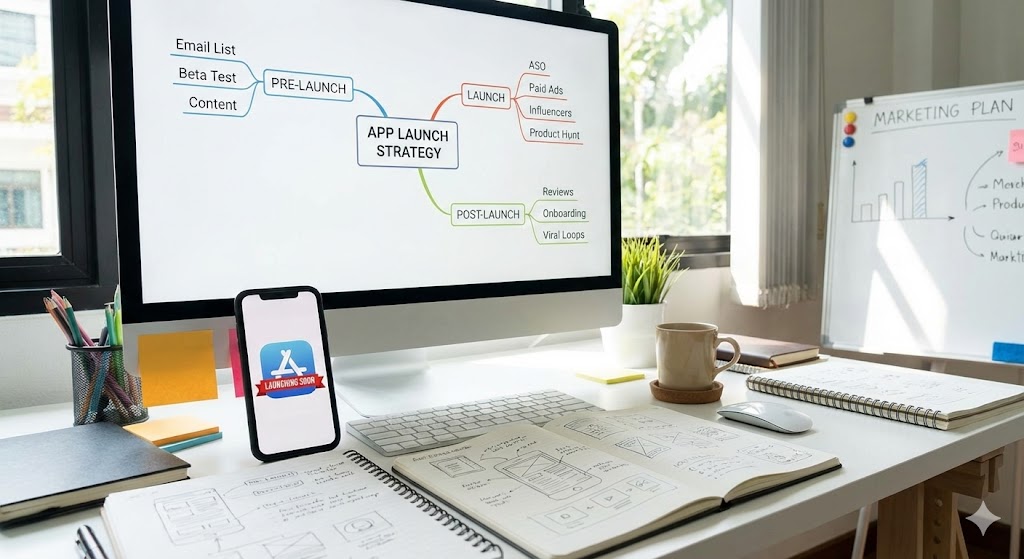
Introduction
Launching a consumer app can be life-changing—not because of luck, but because of leverage. A well-executed app combines global distribution, recurring revenue, and minimal marginal cost in a way few other businesses can. Many founders come from service-based backgrounds (agencies, consulting, freelancing) and eventually hit the same ceiling: trading time for money. B2C apps offer a different model. You build once, distribute globally, and monetize through subscriptions—without sales calls, constant meetings, or client-specific fulfillment. In 2026, this model is more accessible than ever. Tooling has improved, distribution is frictionless, and user willingness to pay for apps is at an all-time high. At the same time, competition is increasing, which means execution—not ideas—determines outcomes. Over the next few years, apps will likely create more high-leverage founders than many traditional online businesses. But success will concentrate among those who validate aggressively, move fast, and understand distribution from day one. The following process breaks down a practical, repeatable way to go from idea to a monetized app launch.
1. Validate your app idea before you build
Most people fail before they start by building something nobody wants. Validation is the crucial first step. 1) Find a painful problem: Identify a daily struggle your app could solve. Great ideas often come from everyday frustrations (health tracking, budgeting, habit formation). 2) Research the App Store: Look for existing apps making at least ~$10k per month. Proven demand is the green light. 3) Study top competitors: Download the best apps in your niche. Screenshot their onboarding flow, pricing, and engagement loops. 4) Scan social media: Check TikTok/Instagram for content around your problem. If people discuss or recommend solutions, the market is active. Once you see evidence of competitors making money and a community talking about the problem, you can consider your idea validated.
2. Build a minimum viable app fast (use the right tools)
In 2026, building an MVP is shockingly fast. The key is to move at lightning speed and not over-engineer. My typical tool stack: - AI coding assistants: Rork, Cursor - ChatGPT: prompts, logic, debugging - Design inspiration: Pinterest, Dribbble - Mobile IDEs: Xcode (iOS) - Paywalls: Superwall or RevenueCat - Backend: Firebase (if needed) Process highlights: - Design & prototype quickly using references and AI-generated UI code. - Implement only core features that solve the user’s problem. - “Rip” onboarding & pricing models from winners—onboarding is ~70% of success. - Use a hard paywall after onboarding to maximize conversion. By the end of this step, you should have a functional app, a strong onboarding flow, and a paywall ready to monetize.
3. Launching your app on the App Store
Prepare the basics: - Developer account: $99/year, enroll early. - App Store listing: clear name, strong subtitle, and 3–5 high-clarity screenshots. - Description: concise, benefit-first. - Keywords: add relevant terms in App Store Connect. - App review: avoid crashes, broken links, or missing privacy policy. Once approved, your app is live—but the real work starts now: distribution.
4. Leverage user-generated content (UGC)
UGC is the fastest way to generate attention. It feels authentic and wins on engagement. Why it works: - Higher trust and emotional connection - Higher engagement than polished ads - Cheap to scale with multiple creators How to execute: 1) Hire UGC creators via platforms or direct outreach. 2) Offer a base rate + performance bonuses. 3) Track what works and replicate the winning format across creators. UGC lets you test many angles quickly and scale what resonates.
5. Partner with influencers for explosive growth
Influencers bring reach and distribution fast. - Find the right fit: match audience and niche. - Negotiate performance-based CPM deals. - Start with a trial post and scale if it converts. One strong influencer partnership can 10x your user base. If it works, double down.
6. Create faceless content pages
Faceless pages scale content without a personality on camera. Use slideshows, screen recordings, animations, and stock footage. Key principles: - Consistency and volume (3–5 posts/day). - Find a repeatable format and iterate. - Build a recognizable visual identity. Faceless pages can generate massive organic reach with little budget.
7. Try founder-led content marketing
Founder-led content builds trust. Share the story behind the product, show wins and lessons, and teach your audience. - Use personal storytelling. - Combine education with product demos. - Leverage trends with an “inside look” angle. Authenticity often outperforms polished ads.
8. Scale up with paid advertising
Paid ads amplify what’s already working. - Platforms: TikTok, Meta, Google App Campaigns. - Use your best UGC and influencer creatives as ads. - Measure everything and optimize by LTV vs CPA. Once your funnel converts, ads can scale predictably and profitably.
Conclusion
A successful app launch is a mix of smart development and aggressive marketing. Validate demand, build fast, and then scale attention with UGC, influencers, and paid ads. Apps are digital real estate: once you know how to build and market one, you can repeat the formula and grow a portfolio of recurring revenue. Execute relentlessly, and the opportunity is massive.